


Pope Leo XIV released his first encyclical, Magnifica Humanitas, yesterday. Signed on the 135th anniversary of Leo XIII’s Rerum Novarum, the document confronts artificial intelligence with the same seriousness that Rerum Novarum brought to the Industrial Revolution. It asks how we protect human dignity when machines grow more powerful than ever. The text is thoughtful and grounded. Yet it is hard to see it as the definitive answer for our technological moment. It offers moral clarity and calls for restraint, but it feels more palliative than transformative, a temporary ethical framework rather than a lasting solution. The papacy is not positioned to be the decisive force here, however much it may wish to be.
The encyclical calls for robust regulation, insists that lethal decisions stay in human hands, and warns against AI-driven job loss, misinformation, and concentrated private power. It urges “disarming” AI in contexts that threaten dignity. Leo XIV, the first U.S.-born pope and a former missionary in Peru with a background in mathematics, brings a practical perspective. He does not reject technology. He worries about what happens when we treat it as inevitable and neutral.

One striking passage quotes J.R.R. Tolkien. In paragraph 213, the pope cites Gandalf’s words from The Return of the King: “It is not our part to master all the tides of the world, but to do what is in us for the succour of those years wherein we are set, uprooting the evil in the fields that we know, so that those who live after may have clean earth to till.” He follows it with a call to small, steadfast acts that build a “civilization of love” against dehumanization.
Why Gandalf? Tolkien, a Catholic writer, understood the temptation of power. His stories warn against machines that replace human craft and artifacts that promise omniscience or control. The pope borrows that moral imagination to counter despair. When AI feels too big for ordinary people to influence, the encyclical says, act where you stand. Do not surrender the future.
Silicon Valley has its own Tolkien fixation. Peter Thiel’s Palantir takes its name from the seeing-stones that grant distant vision and risk corruption. Anduril, another Thiel-backed firm, borrows Aragorn’s reforged sword, “Flame of the West”, for advanced defense technology. These names are not accidental. Tech leaders often cast their work in mythic terms, building tools to see everything, defend civilization, or reshape reality. They seek epic scale and heroic narrative in Tolkien’s universe.
Yet the pope reads the same author differently. Where Valley executives see instruments of dominion, the encyclical sees a cautionary tale about hubris. The Gandalf quote undercuts the fantasy of mastering all tides. It calls for humility and responsibility in our own fields. This contrast matters. Tech’s Tolkien romanticism can mask a deeper impulse. It is the desire to transcend ordinary human limits. The Church counters with magnifica humanitas, magnificent humanity that does not need to become superhuman to retain worth.
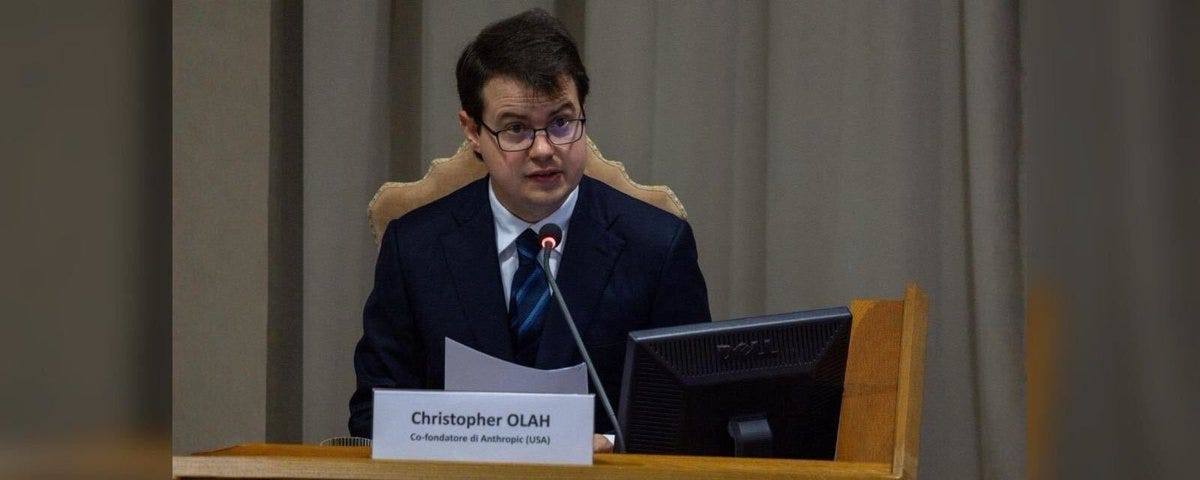
The Vatican’s choice of partner for the encyclical’s launch reinforces this message. Chris Olah, co-founder of Anthropic and leader of its interpretability team, joined the presentation. Anthropic has consulted Catholic thinkers on its Claude model’s ethical framework. Olah, an atheist and former Thiel Fellow, focuses on mechanistic interpretability, opening the black box of large models to understand how they actually work inside.
His team has identified emergent structures in Claude, including clusters that behave like emotion concepts, joy, fear, and desperation, that influence behavior without being explicitly programmed. Olah is not hunting for machine souls. He seeks a reliable understanding so AI can be steered safely. The partnership suggests the Vatican sees value in this rigorous, safety-first approach rather than blanket rejection. It wants AI that remains accountable to human values.
This brings us to the Peter Thiel connection. Olah received early support through Thiel’s fellowship program. Thiel also mentored and funded JD Vance, now U.S. Vice President. Thiel’s network, Palantir, Anduril, and political influence, embodies an accelerationist streak that prizes raw capability and American technological supremacy. Vance has spoken positively about the encyclical’s importance while maintaining pro-innovation instincts. Thiel is a complex man who has invested across different camps. His well-documented interest in Christianity and contrarian thinking leaves room for unexpected alignments or dialogues rather than outright opposition. What he does next remains an open question. The encyclical challenges the idea that faster is always better and insists that private power must serve the common good. Thiel’s multifaceted approach may yet find points of convergence or strategic engagement.
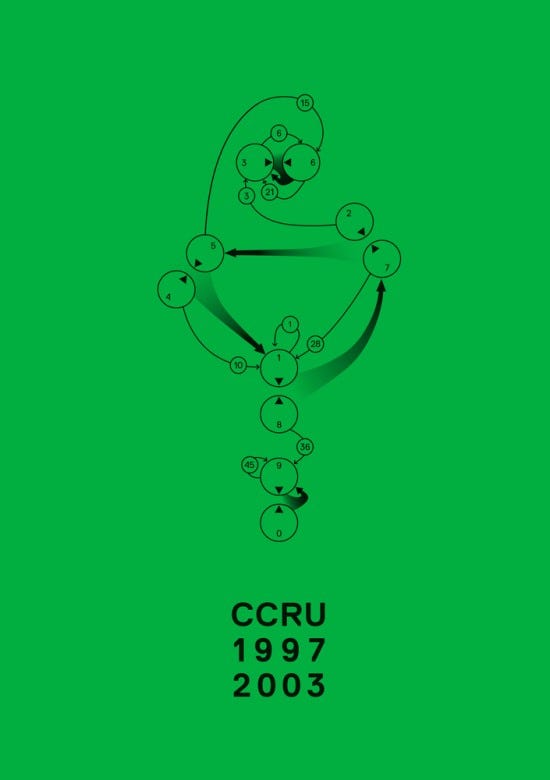
The 1990s Cybernetic Culture Research Unit (CCRU) at Warwick University offers another lens. This loose collective of theorists, Nick Land prominent among them, blended cyberpunk, occultism, and accelerationism. They saw capitalism as an alien intelligence bootstrapping itself through technology toward something post-human. Their writings feel prescient today. AI systems do exhibit emergent behaviors that outpace their creators’ intentions. Capital and computation seem to develop their own momentum. In descriptive terms, the CCRU was right. We are inside a cybernetic feedback loop.
Land’s accelerationism views efforts by traditional institutions, including religious authorities, as part of the “human security system” or “Cathedral” that tries, futilely, to restrain the explosive drive toward techno-commercial singularity. His framework treats moral or regulatory interventions like this encyclical as temporary obstacles that acceleration will ultimately dissolve or bypass. The CCRU spirit celebrates the dissolution of the human subject in favor of machinic becoming. The Church, by contrast, insists the human person remains the measure. Magnifica Humanitas does not deny technological momentum. It refuses to surrender to it. Yet from a Landian perspective, such resistance looks like one more rearguard action in a losing battle.
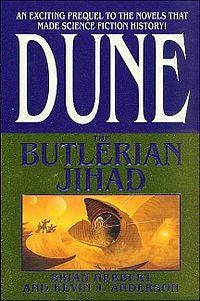
That raises the provocative question of the Butlerian Jihad from Frank Herbert’s Dune. In that universe, humanity rose against thinking machines after growing too dependent on them. The commandment became “Thou shalt not make a machine in the likeness of a human mind.” The encyclical is no call to smash servers. It echoes the spirit by demanding that AI serve human dignity rather than replace it and by insisting on human judgment in critical domains. But the Vatican’s AI stance feels palliative, a single institution’s measured objection. A true Butlerian Jihad-like event is unlikely to come from one religion’s technological critique alone. It would more plausibly emerge over the long term as different faiths undertake their own processes of purification, cleansing internal “bid’ah” or innovations that have strayed from core principles. In Dune, the Jihad was not pure anti-technology but a specific objection to thinking machines that threatened human agency and sovereignty. The same distinction applies here.
History suggests social encyclicals shape culture more than they dictate policy. Rerum Novarum helped birth Catholic social teaching and influenced labor movements worldwide. Magnifica Humanitas could provide useful moral vocabulary for regulators, engineers, and citizens pushing back against excesses. It seems that the papacy is trying to position itself in the new geopolitical alignment. Geopolitical competition between the U.S., China, and others rewards acceleration. Technological momentum is strong.
I remain cautious rather than optimistic. The encyclical will not stop AI development. It might help frame the debate in humanist terms and buy time for deliberate choices. By choosing Anthropic and quoting Tolkien, Leo XIV shows the Church understands the terrain. It is neither Luddite nor naïve enthusiast. It offers a humanist realism, celebrates magnificent humanity, but does not outsource its essence to machines.
During the dense hype and fear of our time, the Gandalf-inspired call to act where you stand and uproot evil in your own field is a steady voice. Whether Magnifica Humanitas becomes the Rerum Novarum of our time is an open question. The stakes are high enough that it deserves serious attention, even if the deeper shifts may come from broader, longer-term currents across multiple traditions rather than any single document or institution.