


Remember the good old days of the Cold War? When superpowers flexed their muscles with nukes and moon landings, turning atoms and orbits into symbols of supremacy? Fast-forward to 2025, and we’ve swapped mushroom clouds for megaflops. Welcome to the AI arms race, where “compute power” isn’t just tech jargon, but it’s the new nuclear deterrent. Whoever racks up the most GPUs, data centers, and algorithmic wizardry doesn’t just win bragging rights; they reshape global power like a digital deity. As a geopolitics junkie who’s seen tech eclipse tanks, let me break this down with some historical flair, fresh data, and a dash of wit. Buckle up! it’s not sci-fi; it’s your future.
Think back to the 1940s. The Manhattan Project birthed the atomic bomb, giving the U.S. a brief monopoly that ended with Soviet spies and Stalin’s own blasts. That era’s lesson? Tech breakthroughs aren’t just inventions; they’re geopolitical earthquakes. Today, AI’s “compute power”, which is the raw processing muscle needed to train massive models like GPTs or Grok, is the equivalent. It’s not about who has the biggest bomb anymore, it’s who has the biggest brain in the cloud. According to recent reports, the U.S. controls the lion’s share of global AI training compute, building clusters that guzzle more power than small countries. China, meanwhile, is pouring up to $98 billion into AI capex this year alone, a 48% jump from 2024, with $56 billion from government programs and $24 billion from tech giants like Alibaba and Tencent. That’s not pocket change; it’s a strategic sprint to close the gap, echoing how the Soviets ramped up after Sputnik shocked the world in 1957.

But why does compute matter so much? In AI, it’s the great equalizer or divider. Training frontier models demands insane resources. OpenAI’s latest chip orders alone could suck up 26 gigawatts, enough to power three New York Cities at peak. Control that, and you dictate everything from autonomous drones to economic forecasts. The U.S. holds the high ground here, thanks to Nvidia’s dominance and its Blackwell chips are geopolitical signaling devices, projecting U.S. momentum in this “Digital Cold War.” China counters with clever workarounds: Huawei’s Ascend 910C, a homegrown accelerator shipping en masse in 2025, links lower-powered chips for double the performance of rivals, despite U.S. export controls. It’s like the Industrial Revolution all over again. Britain’s steam engines gave it empire-building edge in the 1800s, but rivals like Germany innovated around patents to catch up. Today, Beijing’s “system-level optimization” (think efficient clustering) versus America’s “brute-force capital” is the modern twist.
Deterrence in this race isn’t about mutually assured destruction, it’s mutually assured disruption. U.S. sanctions on high-end chips like Nvidia’s A100s force China to pivot to domestic alternatives, but they’ve created an oversupply of AI hardware in China, 250 public data centers flushing with chips, some even H100s smuggled through gray markets. Yet, utilization hovers below 30%, highlighting a demand bottleneck, not supply. Flip to the U.S. A hidden ace is its “Gross Domestic Intelligence” (GDI), tens of millions of idle NPUs in smartphones and laptops that could boost inference capacity by 30-40% without new infrastructure. This hybrid local-cloud setup turns everyday devices into strategic assets, much like how the U.S. mobilized its industrial base during WWII to outproduce Axis powers.
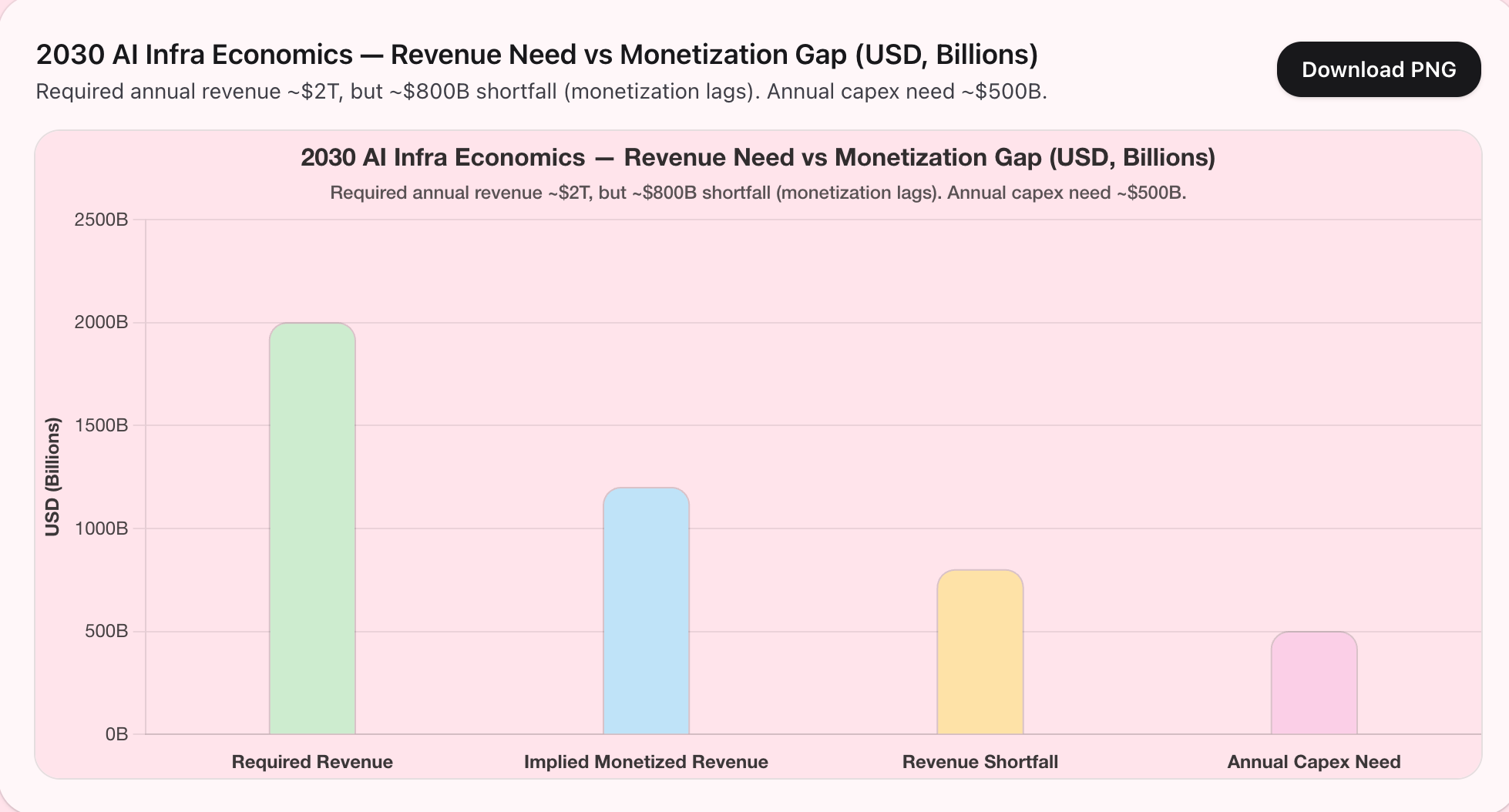
And it’s not just a U.S.-China duel. Russia, sidelined by sanctions, leans on cyber warfare and Chinese tech support, exporting disinformation tools as its deterrent. Europe? The EU’s AI Act is a regulatory shield, but it risks falling behind without massive compute investments—echoing how post-WWI France built the Maginot Line, only to be outflanked by blitzkrieg innovation. Emerging players like the UAE and India are building sovereign AI stacks, but scale favors the giants. By 2030, Bain predicts an $800 billion U.S. revenue lead in AI infrastructure, unless China’s 3D-stacked accelerators (claiming 120 TFLOPS on older nodes) disrupt the game.
Strategic superiority here means rewriting reality. AI doesn’t just predict wars; it wins them preemptively with targeting systems, economic simulations, even narrative control. Remember the Space Race? Apollo 11 wasn’t just a moonwalk. It was soft power that bankrupted the Soviets chasing parity. Today’s AI race could do the same: Overinvest, and you drain resources; underinvest, and you’re obsolete. As 2025 unfolds with truces on tariffs but not chips, the real battle is for “compute sovereignty.” Nations are pledging billions at summits like Paris 2025 to upgrade AI infra, turning data centers into digital fortresses.
So, why tune in to this saga? Because ignoring AI geopolitics is like sleeping through the Renaissance you wake up in someone else’s world. The side that masters compute won’t just lead; it’ll define ethics, economies, and empires. From historical parallels to today’s chip skirmishes, this is the thrill ride of our era. Stick around at teknopolitika.com. We’ll decode the next moves, from Stargate superclusters to stealthy sanctions. Who wins? Spoiler: It’s the ones who see it coming. Let’s geek out on the geopolitics that’s coding our tomorrow.