

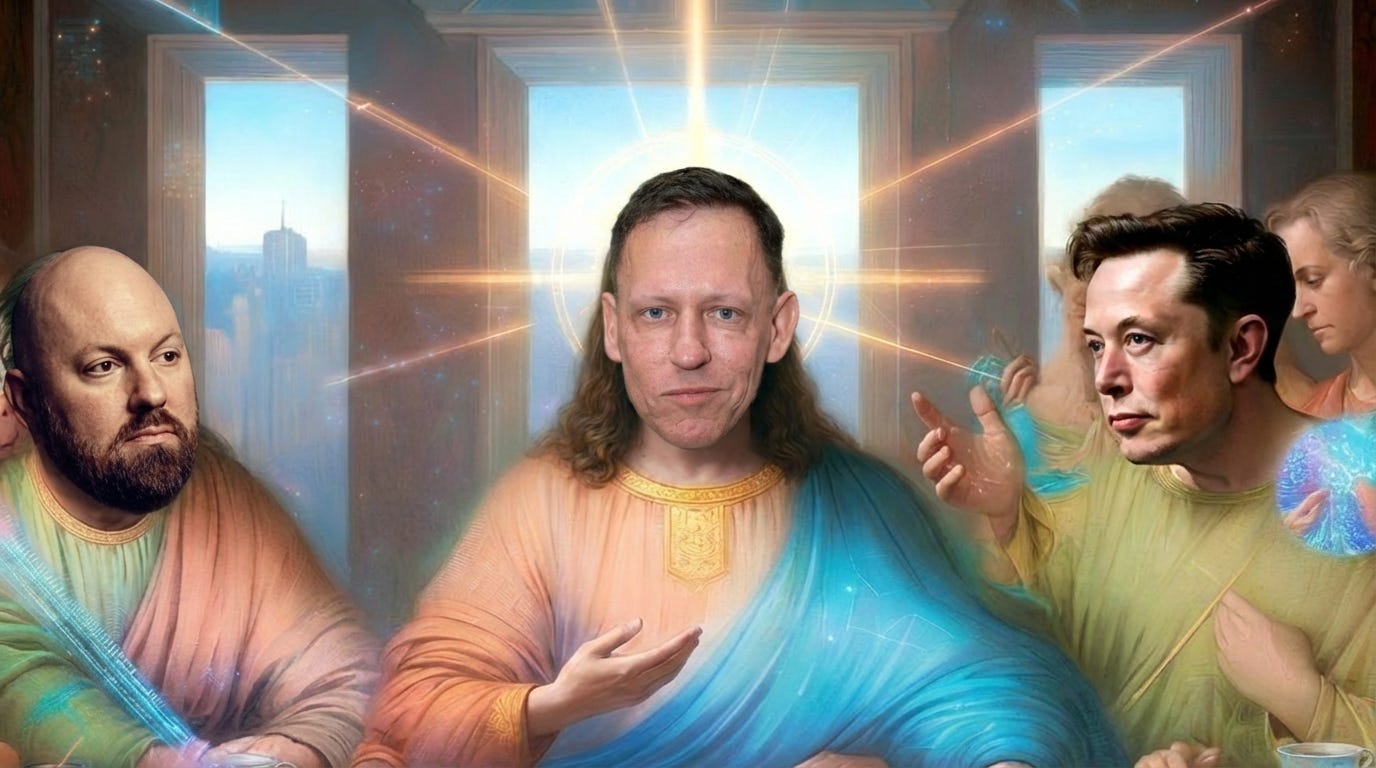
Alright, buckle up, folks! Whether you’re a cinephile, a tech junkie, or just someone scrolling through life with a popcorn bucket in hand, we’re diving into the wild world of Mountainhead.
This 2025 flick, penned and directed by Jesse Armstrong (yep, the genius behind Succession‘s deliciously dysfunctional family feuds), is basically a razor-sharp satire on the tech overlords who think they can code their way to ruling the planet. If you haven’t seen it yet, no worries. I’ll keep this spoiler-light, like teasing a plot twist without ruining the punchline. Think of it as The Big Short meets Dr. Strangelove, but with AI, billionaires, and enough ego to power a SpaceX rocket.
At its core, Mountainhead follows a cozy cabal of ultra-rich tech bros holed up in a snowy retreat, playing high-stakes poker while the world outside spirals into chaos. These characters aren’t just random rich dudes. They’re thinly veiled stand-ins for
real-life titans like Elon Musk, Mark Zuckerberg, Sam Altman, Peter Thiel, and
Marc Andreessen. The film’s got this biting humor, poking fun at their
god-complex vibes, how they casually tinker with society like it’s a buggy app
in beta testing.
Now, zoom in on the Elon Musk-inspired character (let’s call him “Space Baron” for fun, to avoid spoiling the cast’s stellar performances). This guy’s a whirlwind of
disruption, wielding his massive social media platform like a digital
Excalibur. He stirs up global drama with a few keystrokes; spreading memes,
amplifying controversies, and basically turning the internet into his personal
chaos engine. But it doesn’t stop at online trolling. The crew starts
brainstorming which country to “upgrade” next, debating takeovers like they’re
picking a Netflix show. It’s hilarious in a terrifying way, highlighting how
these elite few see nations as mere playgrounds for their grand experiments.
Armstrong nails the absurdity: these aren’t villains twirling mustaches but
they’re well-intentioned disruptors who accidentally (or not) set the world on
fire while sipping artisanal whiskey. It’s got Steve Carell and Jason
Schwartzman chewing scenery like pros, and the dialogue zings like a Twitter
beef on steroids.
But here’s where the reel meets the real: Mountainhead isn’t just fiction. It’s like
Armstrong held up a mirror to Elon Musk’s actual antics on X. Musk doesn’t
literally plot country takeovers in a cabin (that we know of), but he’s turned
his platform into a geopolitical megaphone, stirring pots from London to Tehran
to Caracas. Take the UK, for instance. During the 2024 riots, Musk amplified
far-right narratives, tweeting about “civil war” and boosting anti-immigration
voices, which critics say fanned the flames and gave extremists a massive
signal boost. In Iran, he provided Starlink access to protesters dodging
government blackouts, positioning himself as a digital liberator but also
inserting himself into a sovereign nation’s turmoil without an invite. And
Venezuela? Musk weighed in on elections, calling out President Maduro and even
offering to “fight” him in a cage match (classic Elon flair), which amplified
opposition voices and added fuel to an already volatile situation. It’s not
direct conquest like in the movie. No boardroom votes on “Which nation gets the
Musk makeover?” But it’s undeniable political meddling. Musk’s 200-million-plus
followers hang on his every post, turning his opinions into viral policy
influencers. As X’s owner, he’s not just participating; he’s shaping the
discourse, often tilting toward right-wing views that challenge established
governments.
Now, let’s crank up the conspiracy vibes (in a fun, tinfoil-hat-optional way). What if this isn’t random chaos? Critics argue that Musk and his tech bro circle -Musk,
Andreessen, Thiel, and pals- aren’t just poking bears for laughs. They’re part
of a broader ideology that sees traditional states as outdated relics, ripe for
disruption. By amplifying divisions on social media, they weaken national
cohesion, making room for their vision of a fragmented, tech-driven world.
Enter the “Network State,” a brainchild of Balaji Srinivasan (ex-CTO of
Coinbase and Andreessen Horowitz alum). This isn’t some sci-fi plot, it’s a
real manifesto from his 2022 book, The Network State: How to Start a New
Country. The idea? Build online communities that evolve into sovereign
entities, complete with their own currencies, laws, and borders. Think
crypto-nations floating in the cloud or on seasteads. It’s like upgrading from
nation-states to “network states,” where loyalty isn’t to flags but to apps and
algorithms. Musk’s forays into global politics? They align eerily with this,
chipping away at old power structures to pave the way for these digital utopias
(or dystopias, depending on your VPN settings).
In Mountainhead, the bros debate country-shopping like it’s Amazon Prime. In reality, Musk’s tweets erode trust in governments, while ideas like Network States offer the “fix”, a world where tech elites call the shots without pesky elections or borders.
It’s equal parts genius and bonkers, but hey, in an era where a meme can tank a
stock or topple a regime, who’s to say it won’t happen? If this all sounds like
a wild ride, it is. But that’s the beauty of it. Tech isn’t just gadgets
anymore; it’s the new geopolitics, served with a side of satire. So, grab your
tinfoil hat, watch the movie, and ponder: Are we living in the prequel?