

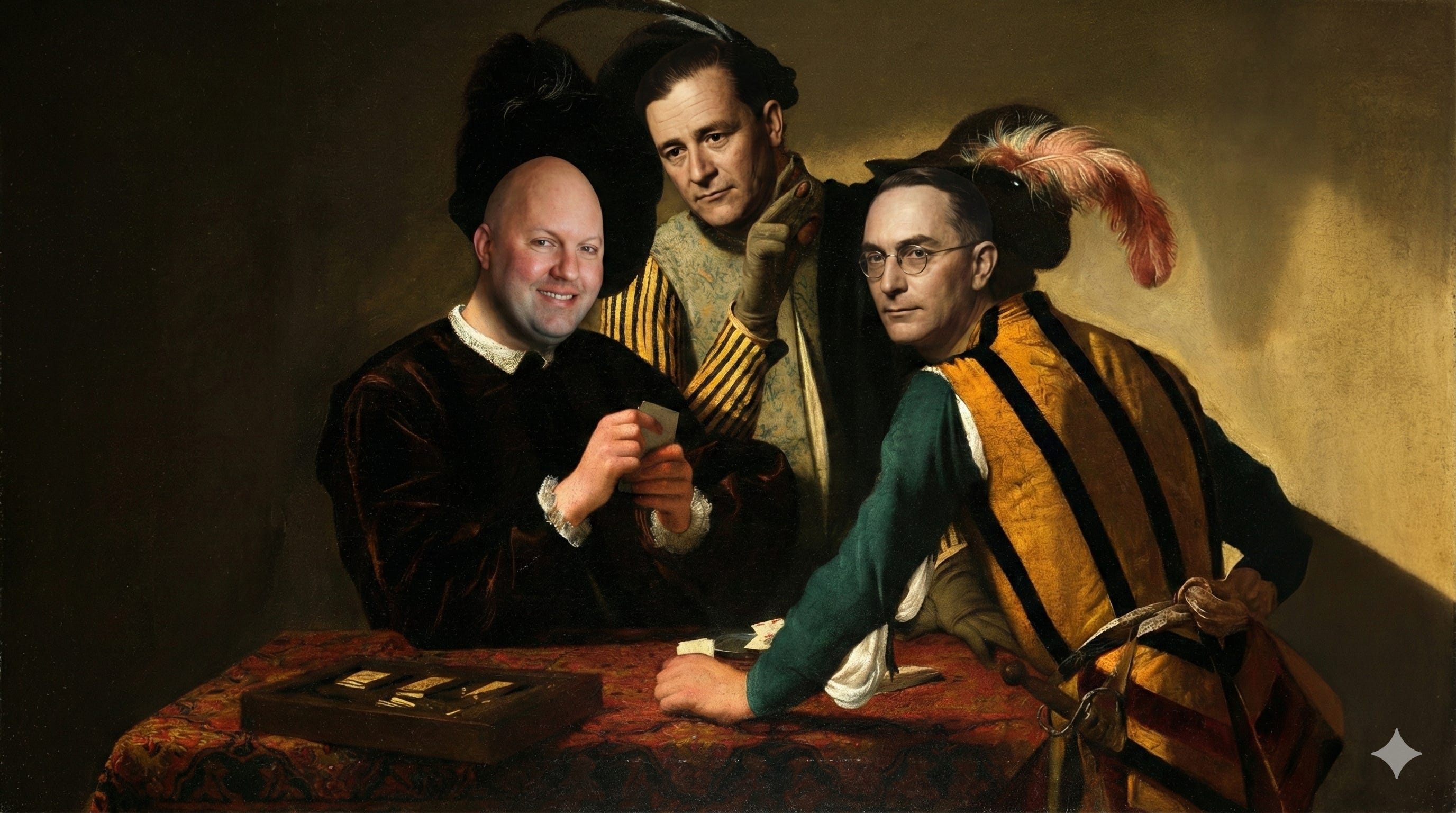
In the wild west of Twitter (sorry, X), on October 30, 2025, Marc Andreessen drops a bombshell: a photo of Eric Voegelin’s The New Science of Politics, paired with his own cryptic warning against “immanentizing the eschaton” and going “full millenarian.”

For the uninitiated, that’s philosopher-speak for “Don’t try to build heaven on Earth, you utopians.” Coming from a VC who’s basically the high priest of techno-optimism, it’s like Elon Musk tweeting “Maybe don’t colonize Mars too fast.” But let’s zoom out. Andreessen’s nod to Voegelin isn’t just a book club pick. It’s a flare gun in the ongoing techno-political circus.

The Silicon Flare Gun: Andreessen’s philosophical bombshell
And to make sense of it, we need to pit Voegelin against his interwar frenemy, Carl Schmitt, the German thinker who saw politics as a bar fight between friends and enemies. Buckle up; this op-ed’s about to get hilariously philosophical.
First, a quick primer for those whose idea of deep thought is scrolling Threads. Carl Schmitt, the jurist who influenced everyone from Nazis to neoliberals (talk about a flexible resume), boiled politics down to one rule: It’s all about the “friend-enemy” distinction.
Forget debates or compromises; the sovereign decides who’s in the club and who’s out. In Schmitt’s world, politics isn’t about ideals; it’s raw power, exceptions, and deciding when to suspend the rules.
Now, fast-forward to techno-politics in 2026: Think Big Tech CEOs drawing lines in the silicon sand. Andreessen’s a16z fund backs AI startups like they’re the “friends” in a global arms race against Chinese tech “enemies.” Schmitt would nod approvingly: “Ja, that’s politics, pick your side or get disrupted.” No heaven-building here; just eternal vigilance against the other guy hacking your cloud.
Eric Voegelin, the Austrian philosopher who fled the Nazis and spent his life roasting modern ideologies as “gnostic” heresies, fancy for saying they’re delusional cults trying to “immanentize the eschaton,” or force-feed utopia down society’s throat. Voegelin saw politics as a quest for order rooted in human experience, not some millenarian fever dream where we transcend reality.
Ideologies like communism or fascism? Just ancient gnosticism in a suit, promising paradise if you just purge the impurities. Andreessen quoting Voegelin is peak irony: The man who wrote the “Techno-Optimist Manifesto”, a love letter to accelerationism where AI solves everything from poverty to existential dread, now warns against going full doomsday cult? It’s like a CrossFit guy preaching moderation while chugging protein shakes.
The TED Talk from Purgatory: Accelerationism vs. Original Sin
So, how do these two German political philosophers stack up in the age of algorithms and Andreessen? Schmitt’s lens turns techno-politics into a WWE smackdown. Silicon Valley vs. regulators? Friends (deregulate!) vs. enemies (antitrust suits!). AI ethics debates? Nah, just sovereign tech lords deciding the exception, like when OpenAI’s board tried to oust Sam Altman, only for the “friends” (investors) to win.
Schmitt would love it. No neutral ground; you’re either accelerating or you’re the enemy, slowing humanity’s progress. But Voegelin? He’d eye-roll so hard his glasses would shatter. Tech utopians like effective accelerationists (e/acc for short) are classic gnostics, worshipping AI as the new god that’ll immanentize infinite growth, eternal life, and zero scarcity.
Andreessen’s manifesto reads like a millenarian tract: “We believe in accelerationism, the conscious evolution of technology to improve human lives.” Voegelin’s ghost: “Sounds like you’re trying to play God without reading the fine print on original sin.”
Humorously, the comparison reveals why techno-politics is such a clown car. Schmitt gives us the drama. Epic battles like Musk vs. Zuckerberg (remember the cage fight tease?), where politics is theater with billions at stake.
Voegelin supplies the satire. These tech bros think they’re saving the world, but they’re just reinventing old heresies with better GPUs. Imagine Schmitt and Voegelin at a TED Talk.
Schmitt: “The enemy is clear, legacy media, slow regulators, Luddites!”
Voegelin: “Nein, the real enemy is your hubris, you eschaton-immanentizing fool!” Andreessen, caught in the middle, tweets a book pic as if to say, “Hey, I’m self-aware... ish.”
The Eschaton is on You: Coding the apocalypse away
In the end, maybe Andreessen’s post is a subtle self-roast. Techno-optimism walks a Schmittian tightrope of friend-enemy tech wars, but veers dangerously into Voegelin’s forbidden gnostic zone. If we don’t heed the warning, we’ll end up with AI overlords promising utopia while delivering dystopia, think Skynet with ads. So, tech lords, take note. Pick your enemies wisely (à la Schmitt), but for the love of sanity, don’t try to code the apocalypse away (pace Voegelin). Otherwise, the eschaton’s on you.
Indeed, the irony is striking: don't immanentize the eschaton, don't reform, don't question systems when it comes to policy. But do immanentize it in the form of technology and dare I say hubris.
It makes more sense when we remember how much Silicon Valley hates competition: don't immanentize the eschaton, because that's *our* business. Or the gnostic temptation in a tailored suit.
A longer piece on how Voegelin's insight turned into a stop-work order for the Gospel: https://open.substack.com/pub/heyslick/p/when-hope-for-a-better-world-becomes
Dialectically speaking, Andreessen’s gesture may mark a progression (satire implied): naïve techno-utopianism as thesis, checked by Voegelinian restraint as antithesis. The unresolved question, however, is accountability (not as an elite prerogative, but as a shared condition). If a synthesis is to emerge, one in which systems of innovation answer to the people and the planet they impact and reshape, who decides that acceleration is inevitable, and by what measures do we call it progress? And what forms of systems thinking and governance would make such accountability structural, by design rather than by afterthought?