

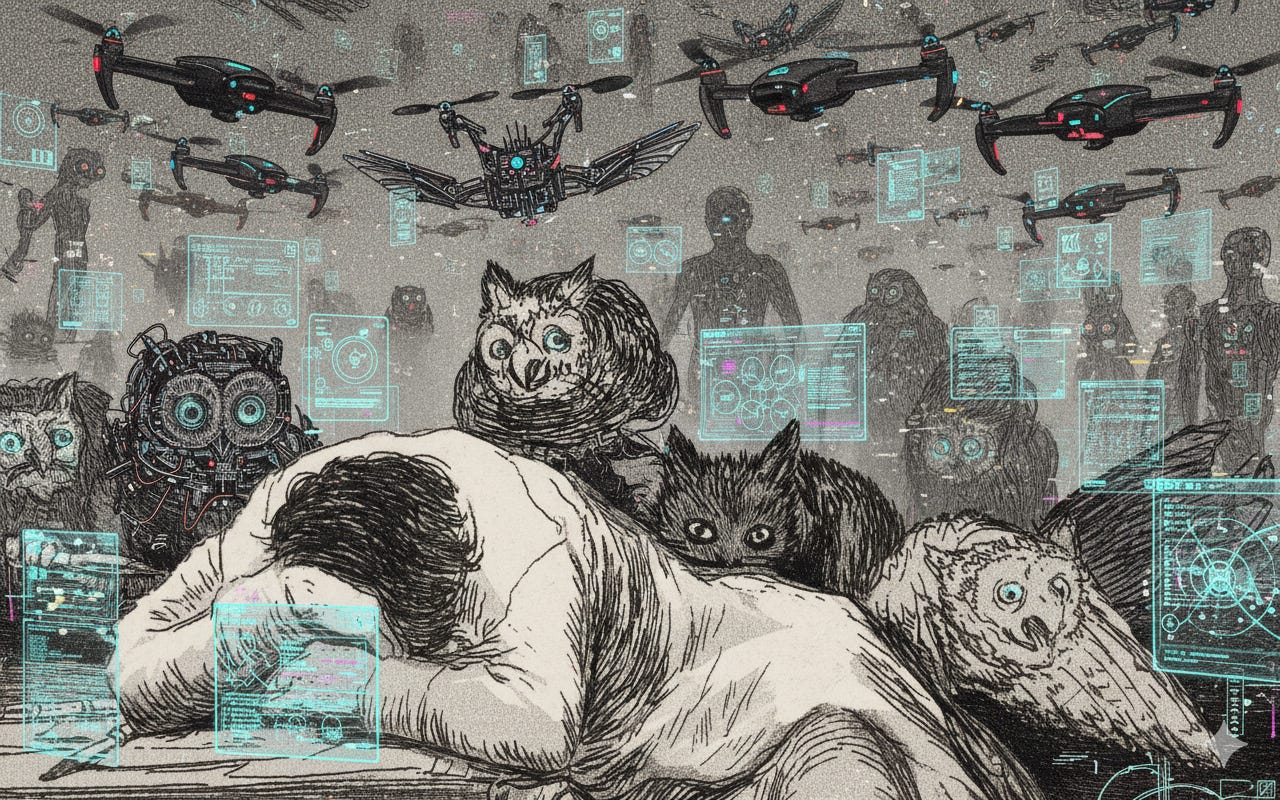
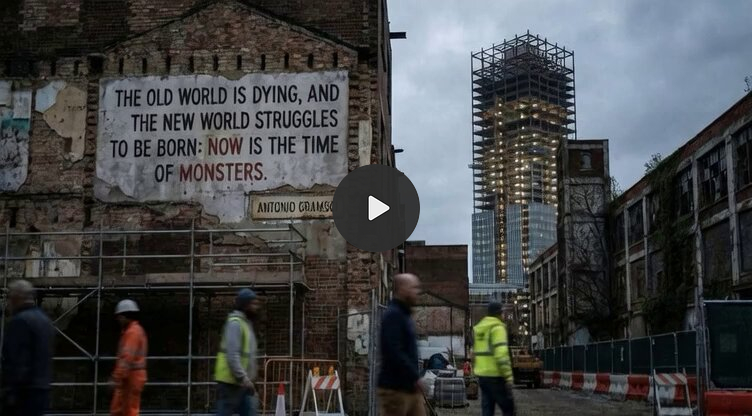
On December 9, 2025, exactly 22 days before we finished the first quarter of the 21st century, I created a video using Grok’s image generation feature and shared the following X post. People caught in the midst of chaos were passing in front of a wall on which Antonio Gramsci’s famous words were written.

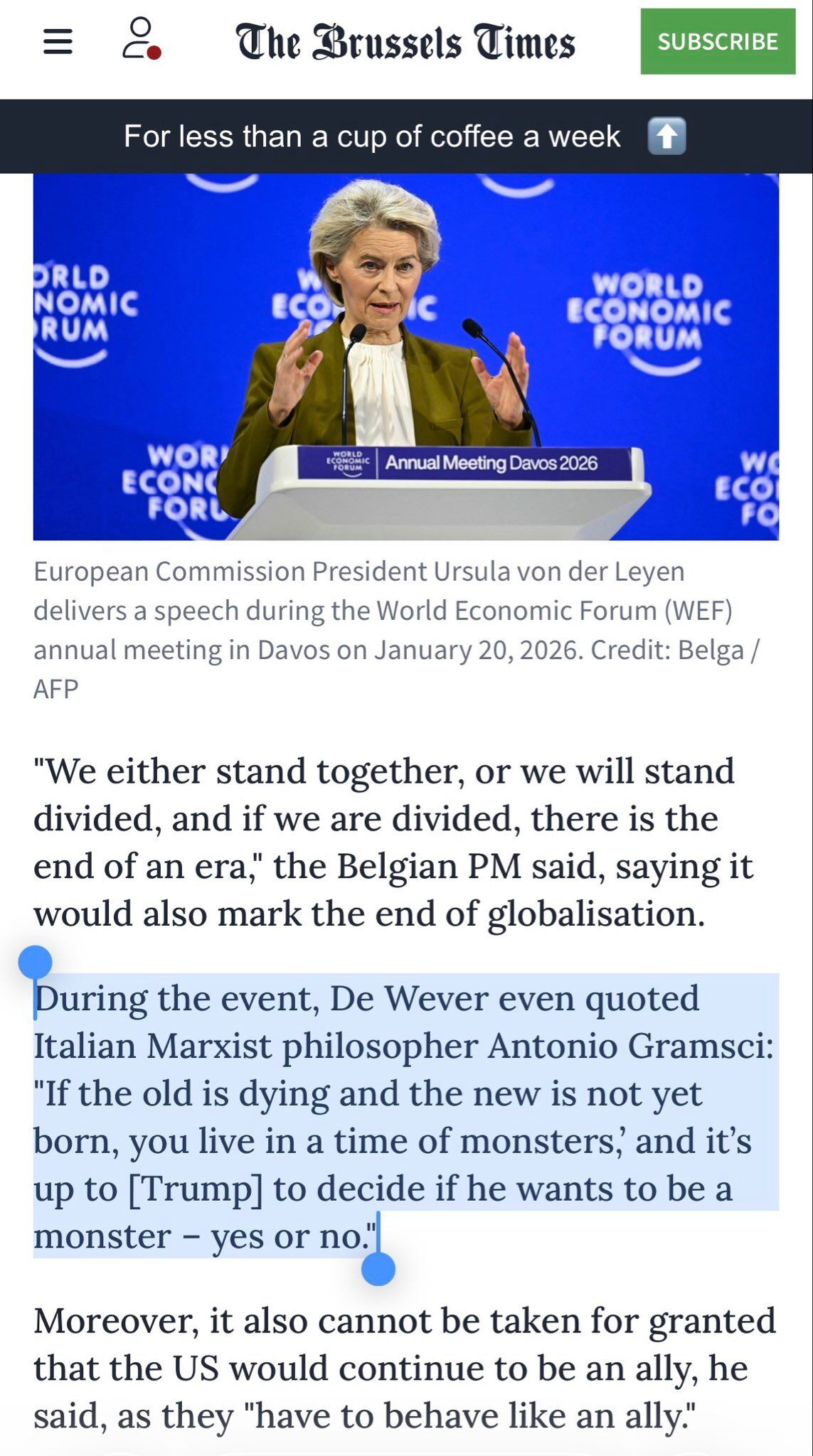
Last week, Belgian PM Bart De Wever delivered a speech at the World Economic Forum in Davos, invoking this famous quote commonly attributed to Antonio Gramsci about the “time of monsters” amid the uncertainties of a shifting global order.
During tech disruption, Antonio Gramsci’s reflections on crisis resonate with uncanny relevance. The Italian Marxist thinker, imprisoned by Mussolini’s fascist regime in the 1930s, penned a passage in his Prison Notebooks (Quaderni del carcere) that has echoed through the decades:
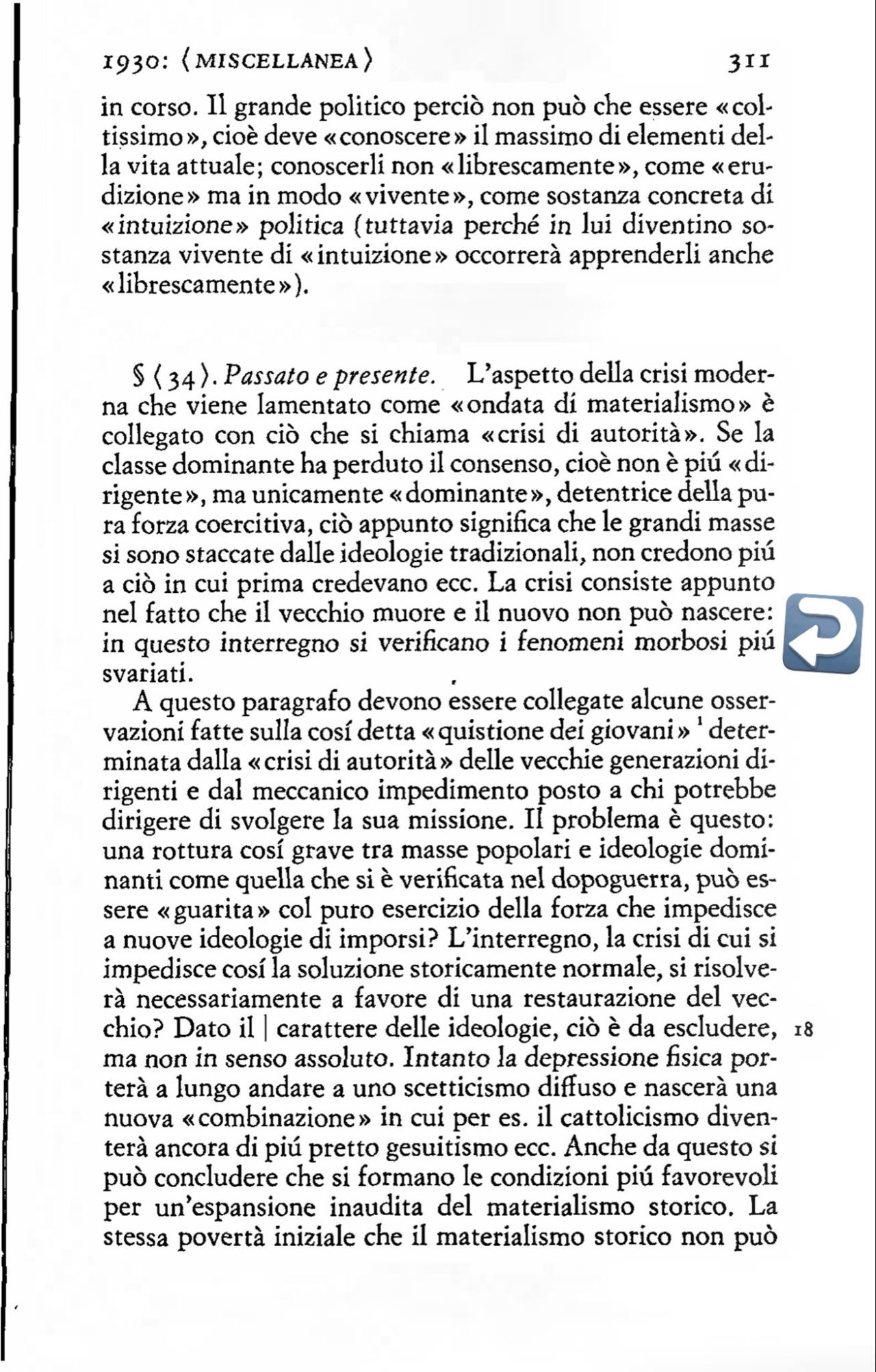
“The crisis consists precisely in the fact that the old is dying and the new cannot be born; in this interregnum a great variety of morbid symptoms appear.”
This line, from Notebook 3 (1930), captures the limbo of societal transition, a period of decay and stalled rebirth, marked by pathological anomalies. Yet, in popular discourse, especially since the 2016 U.S. presidential election and the collapse of political correctness, it has morphed into a more dramatic refrain.
“The old world is dying, and the new world struggles to be born: now is the time of monsters.”
This evolution from “morbid symptoms” to “monsters” is a cultural adaptation that reveals how ideas are reshaped to fit contemporary anxieties. In our techno-political landscape, where technology both promises utopia and unleashes dystopian forces, this misattributed quote serves as a lens to examine the “monsters” emerging from digital cracks, surveillance capitalism, algorithmic bias, disinformation ecosystems, and the erosion of democratic norms. By tracing the quote’s origins, transformations, and implications, we can better understand how Gramsci’s metaphor for societal pathology has been poeticized into a warning about grotesque entities, and why this matters in an age where technology accelerates crises rather than resolves them.
Gramsci’s Original Diagnosis of “Interregnum”
To appreciate the distortion, we must return to the source. Antonio Gramsci wrote from Turi prison amid the Great Depression, the consolidation of fascism in Italy, and the Communist International’s “third period” of ultra-left sectarianism. His Prison Notebooks, smuggled out and published posthumously, are a fragmented masterpiece of political theory. In Notebook 3, §34 (as edited by Valentino Gerratana in the 1975 Einaudi edition), Gramsci describes a “crisis of authority” where the ruling class loses its hegemonic grip. The masses detach from traditional ideologies, no longer granting consent to the old order. This vacuum, he argues, breeds “morbid symptoms”, fenomeni morbosi più svariati in Italian, evoking medical terminology for abnormal, pathological manifestations.
Gramsci’s choice of words is deliberate. “Morboso” implies something diseased, degenerative, or infectious, akin to symptoms of a body in distress. He wasn’t invoking literal monsters but rather the aberrant behaviors and ideologies that surface in transitional voids. In context, these symptoms likely referred to pathologies within the left itself, such as revolutionary impatience or sectarianism, echoing Lenin’s critique of “infantile disorders” in communism. The interregnum, borrowed from ancient Roman terminology for the gap between sovereigns, symbolizes a suspension of normalcy where legality and ideology falter. As Gramsci elaborates nearby, this leads to “cynical politics” and widespread skepticism, potentially paving the way for new arrangements if navigated wisely.
This nuance is crucial. Gramsci’s analysis is dialectical. Crises are not endpoints but opportunities for reinvention. Yet, in our tech-saturated time, where platforms amplify echo chambers, these “morbid symptoms” manifest as digital pathologies. Consider the rise of online radicalization. Algorithms prioritize engagement over truth, fostering sectarian bubbles that mirror Gramsci’s warnings about left-wing deviations. In 2024 alone, AI-generated deepfakes have disrupted elections in multiple countries, creating “morbid” distortions of reality that erode trust in institutions. Here, technology exacerbates the crisis, turning interregna into breeding grounds for virtual monsters.
The Poetic Mutation Amid Morbid Symptoms and Surging Monsters
The shift to “monsters” didn’t happen in a vacuum. As cultural anthropologist Clara Gallini noted in her studies of Gramsci’s reception, translations often infuse original texts with new layers, sometimes at the expense of fidelity. The pivotal adaptation appears in French intellectual circles from the 1970s onward. A widely circulated version, possibly from Gallimard editions or leftist journals, renders it as:
“Le vieux monde se meurt, le nouveau monde tarde à apparaître et dans ce clair-obscur surgissent les monstres.”
Here, “interregno” becomes “clair-obscur” (chiaroscuro), a term from art history evoking the dramatic interplay of light and shadow in paintings by Caravaggio or Rembrandt. This poetic flourish implies a twilight zone of uncertainty, heightening the drama. More strikingly, “fenomeni morbosi” is replaced with “surgissent les monstres”, monsters emerging or being born.
This French variant’s appeal lies in its memorability and evocative power. It draws implicitly from Francisco Goya’s 1799 etching El sueño de la razón produce monstruos (”The Sleep of Reason Produces Monsters”), where rationality’s lapse unleashes nightmarish figures. In Gramsci’s adapted form, monsters symbolize the irrational horrors birthed in transitional darkness, fitting for post-1968 France, amid decolonization struggles and rising neoliberalism.
French journalist Edwy Plenel popularized this in his 2014 book Dire non (Say No), using it to critique the resurgence of far-right extremism, xenophobia, and societal violence. Plenel defends the adaptation as a “poétique” variant that captures Gramsci’s spirit without betraying it. For him, contemporary “monsters” include hate-fueled imagery and political demagogues, viewing crisis as a test of human agency. Similarly, in 2018, Chilean artist Alfredo Jaar adopted a back-translated Italian version for public posters in Rome:
“Il vecchio mondo sta morendo. Quello nuovo tarda a comparire. E in questo chiaroscuro nascono i mostri.”
In an interview with Artribune, Jaar admits preferring the French for its “stronger and more poetic” impact, invoking licenza poetica (poetic license). He aimed to revive Gramsci’s voice amid Italy’s populist surge under leaders like Matteo Salvini, where migrants were demonized as “monsters.”
The English-speaking world caught on later, influenced by Slovenian philosopher Slavoj Žižek. In a 2010 essay, Žižek paraphrased it as “The old world is dying, and the new world struggles to be born: now is the time of monsters,” which went viral post-2016 Trump election. This looser rendition, Žižek later admitted in a 2025 New Statesman piece, contributed to its global spread, appearing in everything from Blue Labour think pieces to Daily Mail headlines. Žižek links it to multiple interregna: capitalist disintegration yielding techno-feudalism, or patriarchal decline spawning incel cultures.
Why this mutation? As Salvatore Puglia argues in his 2023 essay “I mostri di Gramsci,” the shift from “morboso” (morbid, close to monstrosity as pathology) to explicit “mostri” amplifies the quote’s dramatic flair, making it more shareable in meme culture. Puglia traces ties to medieval bestiaries and films like Dino Risi’s I mostri (1963), suggesting monsters represent the “other”, immigrants, the marginalized, contrasting with “us.” Yet, he warns against binaries, proposing a shared humanity in the face of alterity.
In technological terms, this evolution mirrors how ideas virally mutate online. Platforms have propagated the “monsters” version, often without context, turning Gramsci into a soundbite for doomsayers. Just as algorithms favor sensationalism, the poetic adaptation outpaces the original, much like how misinformation spreads faster than facts in digital ecosystems.
Morbid Symptoms in the Digital Interregnum
Gramsci’s framework gains new urgency in our techno-political age, where the old analog world dies, and a fully digital one struggles to emerge ethically. The interregnum is evident in the clash between traditional governance and tech-driven disruption. Nation-states grapple with borderless data flows, while Big Tech wields hegemonic power without democratic accountability.
Consider surveillance as a prime “morbid symptom.” Platforms harvest behavioral data, predicting and manipulating user actions for profit. This creates monsters of privacy erosion, where targeted ads exploit societal fractures. In Gramsci’s terms, this is a crisis of authority. Tech giants have detached masses from privacy norms, fostering cynicism toward institutions.
Algorithmic bias represents another pathology. As the old meritocratic myths die, a new equitable tech order fails to materialize, birthing “monsters” like automated discrimination in hiring or lending. The 2023 EU AI Act attempts regulation, but enforcement lags, echoing Gramsci’s stalled rebirth.
Disinformation ecosystems amplify this. Social media’s “clair-obscur”, the shadowy blur between truth and fabrication, has spawned deepfakes and conspiracy theories. During the COVID-19 pandemic, platforms enabled anti-vax narratives, mirroring Gramsci’s “infantile disorders” in fragmented movements. Today, with AI chatbots generating plausible falsehoods, the interregnum risks permanent morbidity. There is a society where consensus fractures irreparably.
Even crypto and blockchain, heralded as liberatory, reveal monstrous undertones. Decentralized finance promises escape from centralized banking, yet scams and volatility dominate, preying on the vulnerable amid economic inequality. Tech utopians embody this duality. Visionaries who, in Gramsci’s lens, exploit the vacuum for personal hegemony. These tech-driven symptoms are products of unregulated innovation. As Puglia notes, linking to Goya, when reason sleeps, in regulatory voids, monsters arise.
Reclaiming Gramsci
The “time of monsters” adaptation, while evocative, risks diluting Gramsci’s precision. As Žižek reflects, it fits our era’s morbidities, from techno-feudal hierarchies to sexual economy upheavals, but oversimplifies. Poetic license, as Jaar claims, revives ideas, yet fidelity matters. “Morbid symptoms” remind us crises are treatable, not monstrous inevitabilities.
In techno-politics, this means proactive intervention and digital literacy. Gramsci urged navigating interregna toward hegemony for the subaltern. Today, that calls for tech policies centering human agency over accelerationism.
As we teeter in this digital chiaroscuro, let’s diagnose the symptoms, foster the new. Only then can we banish the monsters or recognize they’re of our own making.