

And why can you not afford to ignore it any longer?
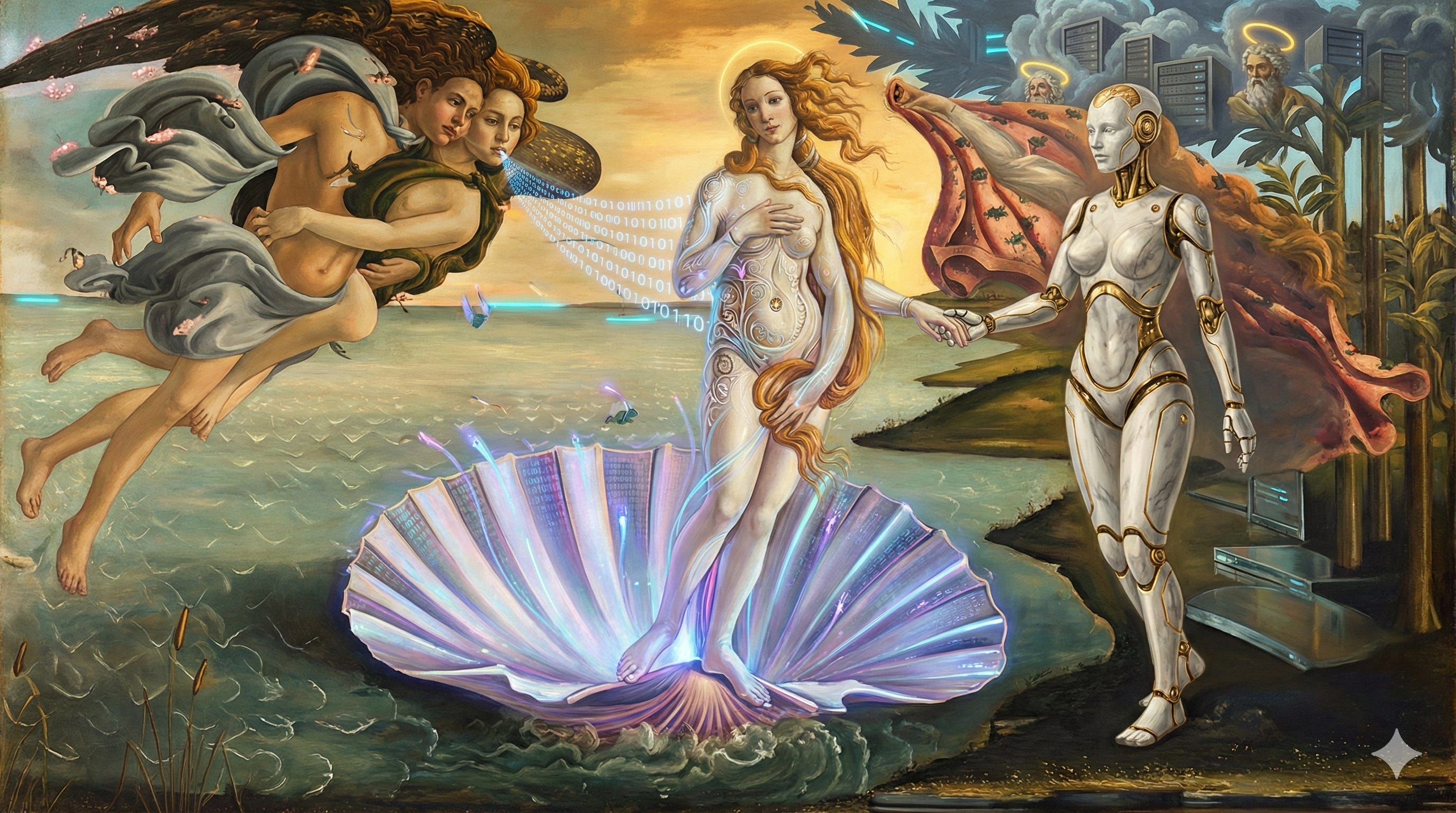
We are no longer living in an era where technology is merely a tool of politics. We have entered the age where technology is politics: raw, brutal, and decisive. The old map of power had borders, parliaments, armies, and currencies. The new map has data centers, undersea cables, GPU clusters, satellite constellations, foundation models, and kill switches embedded in code. Whoever controls these controls the future. The struggle is no longer only between left and right, or even between nation-states in the classical sense. It is between three new actors that have never coexisted before at this scale:
Nation-states that are waking up to the fact that technological sovereignty is the new nuclear deterrent.
Mega-corporations whose market cap exceeds the GDP of most UN member states and whose private laws (Terms of Service) govern more daily human interactions than any constitution.
Algorithms: autonomous systems that already decide who gets a loan, who gets bombed, who gets amplified, who gets shadow-banned, and who gets to see which version of reality.
This triangle (state, corporation, algorithm) is the new cockpit of history.
When the United States can unilaterally cut Iran or Russia off SWIFT, that is techno-politics. When the European Union forces Apple, Google, and Meta to accept a common charger or face existential fines, that is techno-politics. When OpenAI, Anthropic, and xAI quietly decide which values to “align” their models with (values that will soon mediate most human knowledge), that is techno-politics. When Turkey quietly builds its own national AI stack while negotiating cloud deals with both Washington and Beijing, that is techno-politics. When Israel’s Unit 8200 alumni run half the world’s cyber-offense companies and feed real-time targeting data into Iron Dome and Lavender AI, that is techno-politics.
Most people still watch this through the tired lens of “technology policy.” A boring committee in Brussels, a new law about privacy, TikTok bans, or Elon Musk tweets. That is like watching World War II through the lens of logistics regulations.
Techno-politics is not a subcategory of politics. It is the new operating system of power itself.
In the coming decade, the most important decisions affecting your freedom, security, and prosperity will not be taken in parliaments you can vote for. They will be taken in rooms you will never enter, by people you did not elect, using mathematics you cannot read, on infrastructure you do not control.
Will your country have independent access to frontier AI models in 2030, or will it pay tribute in data and dollars to foreign labs?
Will your children learn history from a model trained on open Internet data or from one quietly steered by a ministry in Beijing, Virginia, or Tel Aviv?
When the next war breaks out, will targeting decisions be reviewed by humans or delegated to systems trained on data you never audited?
When the next financial crisis hits, who will have the authority to freeze your digital wallet: your government, a Silicon Valley payments company, or both in coordination?
These are not science-fiction questions. They are being coded, legislated, and deployed right now, mostly in plain sight but in a language the old political class never learned.
This Substack exists for one reason: to translate that new language into something you can actually understand and act upon before the window closes.
We will not bore you with press-release journalism or partisan cheerleading. We will show you the hidden wiring: the real interests behind the EU’s AI Act, the secret clauses in cloud contracts signed by Middle Eastern governments, the quiet race for orbital data centers, the national security memos that never get leaked, the venture deals that look innocent until you see who the LPs are.
We will connect dots across Washington, Beijing, Brussels, Tel Aviv, Abu Dhabi, Ankara, and the Bay Area, because that is where the new great game is played.
If you still think technology is neutral, you are already losing. If you think your vote in national elections is still the most important political act you can perform, you are living in 1995. If you believe “someone else” will protect your interests in this new world, you haven’t been paying attention.
Subscribe. Not because we want your email. Subscribe because in the next five years, the side that understands techno-politics first will write the rules for the next fifty.
The triangle is already spinning. The only question is whether you will watch from the stands or learn how the game is really played.
Welcome to teknopolitika.com
The rest of your future starts here.