

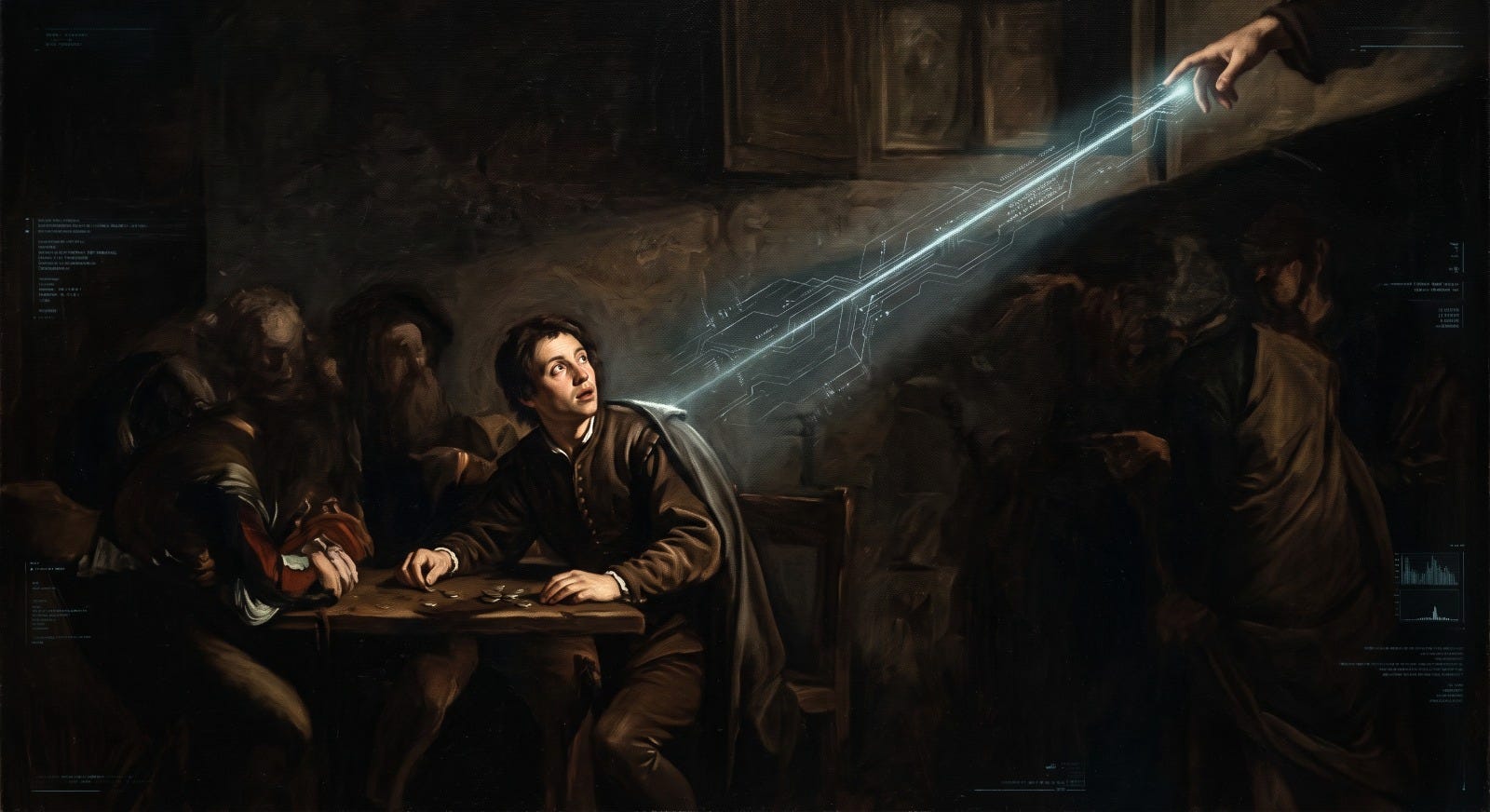
A new AI model is introduced almost every week. Companies make AI better day by day in every field, from creating photos to solving mathematical or physics problems. Universities, which are supposed to be the bedrock of science, are declaring that they are struggling to find the difference between AI-generated and human-generated articles. Amid this trend, the public has some concerns: what if AI takes our jobs?
This is a really meaningful question, but the problem lies in the assumption: why do people think that companies will replace them with AI? There are mainly two sides: worriers and confident people.
Worriers think that the profit from replacing humans with robots would be better for the company owners. Maybe not today, but the cost of production will decrease, so the owners will be able to buy as many production robots as they need and fire people.
On the other hand, the confident see the situation as they do things that no robot could do. In their opinion, they are doing something that requires being human, so they will not lose their jobs, at least in the near future.
Of course, the ideas are changing according to people’s jobs, but the question above changes at this point: what is the thing that humans can do, or, to be more provocative, what are the things that belong to humans?
To answer that, the first step is to ask whether the line between human and everything else was ever as solid as culture likes to believe. In the modern era, culture almost always highlights that humans are the only and ultimate creatures in nature that can create. Unlike other species, humans can think, observe, calculate, and make long-term plans. Therefore, they consider themselves above any other species. That means other species cannot do those things, at least not to the same extent. Yet this image forgets how recent it actually is.
While people were closer to nature, like in the villages but much earlier than today, say 10 thousand years ago, they were not watching the animals from documentaries. The animals were a threat to them because people could be eaten by them. A comparison between a lion and a human would be funny if you picture them both in the forest. Even at the time people discovered fire and started to use it for several goals, it didn’t work directly because, for example, they had to sleep somewhere, and they were not always lucky enough to find a safe space.
Also, the culture tends to forget how many years it took to take fire under control and use it for their own good. Or how many centuries passed before humans finally started to write or build homes. Nowadays, homo sapiens is just an everyday word that everybody uses, but it spans almost 200 thousand years, even though culture’s storytelling starts with Hammurabi, who lived just around 3 thousand years ago.
Back to the animals, science observes a lot of things about animals that culture had not considered before. According to Scientific American, a lot of whales go to the same place when they are close to dying, for example. Can it be said that they have a cemetery? Or, according to Mongabay, chimps use stones as tools when they need them. Can it be said that they are inventing? Science keeps eroding the line between animal and human; the line between human and machine has been eroding just as quietly.
When posthuman debates made the borders of the human unclear, there was no AI, or even mobile phones. Culture says people are the ultimate point, but what is the human with poor eyesight who doesn’t have glasses? During Corona, people created a theory that says “they are implanting chips into our bodies by vaccines,” but why wouldn’t they do that with a pacemaker, a measles vaccine, or laser eye surgery? The border was crossed long ago, just without the conspiracy.
This article is not debating whether they put chips in or not; the main topic is that the idea of the human is already blurred. Most of the population lives in cities that protect people from nature with walls. Using a car, scrolling on the phone for hours, playing games online, and working remotely from a country different from where the company is based have become the new normal.
More than 200 thousand workers across 302 events through mid-July 2026 have been affected by AI layoffs. This pace of job losses is almost double that of 2025. Oracle, Amazon, Meta, IBM, and Microsoft fired thousands of people, and 54% of 2026 layoff events explicitly cite AI. But a paradox emerges: according to a National Bureau of Economic Research working paper via Rentier Digital, 90% of executives report AI has had zero employment impact at their own companies. While 4 major tech firms have committed roughly $700 billion in AI infrastructure capex in 2026, the layoffs are not a reflection of financial necessity or technological replacement.
So, will AI take jobs from humans? Most likely, yes. Is this a terrifying prospect? If humans have been this entangled with technology all along without it ever feeling like a threat, the fear around AI cannot be about the entanglement itself. It has to be about something else. The fundamental question is why humans built a system in which powerful individuals have the authority to decide the fates of others.
Faruk Karaca is an editor at Türkiye Today and a sociology graduate student at Bursa Technical University. He also works on AI model training and evaluation at Turing.
